Small Cake, Big Feelings: The Case for a Calmer Kids' Birthday Party
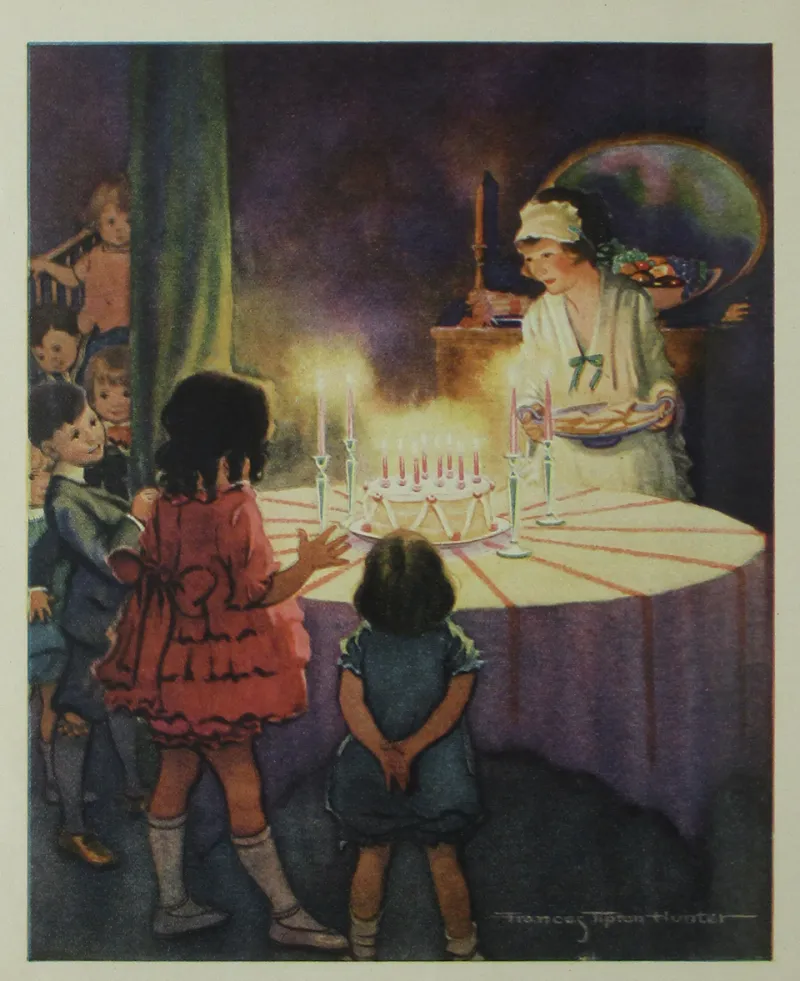
Photo: Frances Tipton Hunter, Public domain, via Wikimedia Commons
A few years ago, I spent £43 on party bags for a five-year-old's birthday party. I can still remember standing in a supermarket aisle, holding tiny pots of bubbles and thinking: this is not a celebration, this is a supply chain. The party itself was lovely. The aftermath was a bin bag full of plastic and a vague sense that I had just paid for a small festival I did not enjoy.
Birthday parties have become one of those parenting tasks that start simply and then quietly expand. First it is a few friends in the garden. Then it is a hall with a bouncy castle. Then it is a soft play centre with a minimum spend, a deposit, and a policy about outside food. Somewhere along the way, a child's birthday stops being a party and becomes a production with a budget, a guest list, and a low-level fear of being judged by other parents.
This is the trap. Not just the £200 one, but the emotional one: the belief that a bigger party means a better parent. It does not. It usually means a more exhausted parent and a child who is too overstimulated to eat their own cake.
The maths of the birthday arms race
Let us do the sums that nobody wants to do on a Sunday evening. A soft play party for fifteen children might cost £12 to £18 per child, before you add food, cake, invitations, and party bags. That is already more than £200. Add a entertainer, a hall deposit, or a themed cake, and the number climbs towards the cost of a short break.
Then there are the hidden costs. The outfit your child insists on. The emergency trip for candles. The present for the sibling who was not invited. The taxi home because you cannot face the bus with a sugar-fueled six-year-old and a giant balloon.
And for what? A room full of children running in different directions while you try to locate a lighter and remember which child has a dairy allergy. It is not that these parties are bad. They can be brilliant. But they are often chosen because they feel like the safe option, not because they are the right one for the family.
The party bag problem
Party bags deserve their own paragraph. They are a small social contract: you came, you ate a slice of cake, here is a plastic whistle and a tiny packet of sweets. But they have grown. Some now contain books, toys, and personalised name tags. Some cost more than the present your child received.
I have seen parents apologise for their party bags. I have seen children compare them in the car. I have seen a bag containing a small plant, which was lovely, and a bag containing a whistle, which was not.
The practical answer is to opt out. Not from generosity, but from the escalation. A slice of cake in a napkin is a party bag. A book from a charity shop is a party bag. A single balloon is a party bag. You do not need to send every guest home with a miniature toy that will be broken by Tuesday.
The soft play trap
Soft play centres are not the enemy. They are warm, they are contained, and someone else does the cleaning. But they are also a business, and they know that parents are tired. The packages are designed to make the decision easy: you pick a number, you pay a deposit, and you turn up.
The problem is that the package rarely includes the bits that make a party feel calm. You still have to manage the guest list, the dietary requirements, and the child who does not want to sit at the table. You still have to be the host, even when you are paying someone else to be in charge.
If soft play works for your family, use it. But go in with a clear budget and a clear plan. Ask what is included. Ask what happens if fewer children come. Ask whether you can bring your own cake. The answers might surprise you, and they might save you £80.
A smaller plan that still feels special
A small party is not a sad party. It is a different kind of party. Here are a few options that tend to cost less, feel calmer, and still give children the thing they actually want: time to play with their friends.
A garden party with three or four friends. A trip to the park with a picnic and a football. A baking afternoon where everyone decorates their own cupcake. A cinema trip with one friend. A hall party with music, games, and a simple tea. A nature walk with hot chocolate in flasks. A pizza night at home with a film.
None of these are fancy. That is the point. The children remember the running around, the cake, and the fact that their friends came. They do not remember whether the napkins matched.
The permission slip
So here is the permission slip you did not know you needed. You are allowed to have a small birthday party. You are allowed to invite fewer children than last year. You are allowed to say no to the soft play package, the entertainer, and the matching party bags. You are allowed to spend the money on something else, or save it, or simply not spend it at all.
You are also allowed to enjoy it. A birthday party does not have to be a test of your parenting. It can be a room full of children eating cake badly, a few adults drinking tea, and a birthday child who feels celebrated because the people they love turned up.
That is not a budget party. That is a good party. And if anyone judges you for it, they are welcome to host next year.